


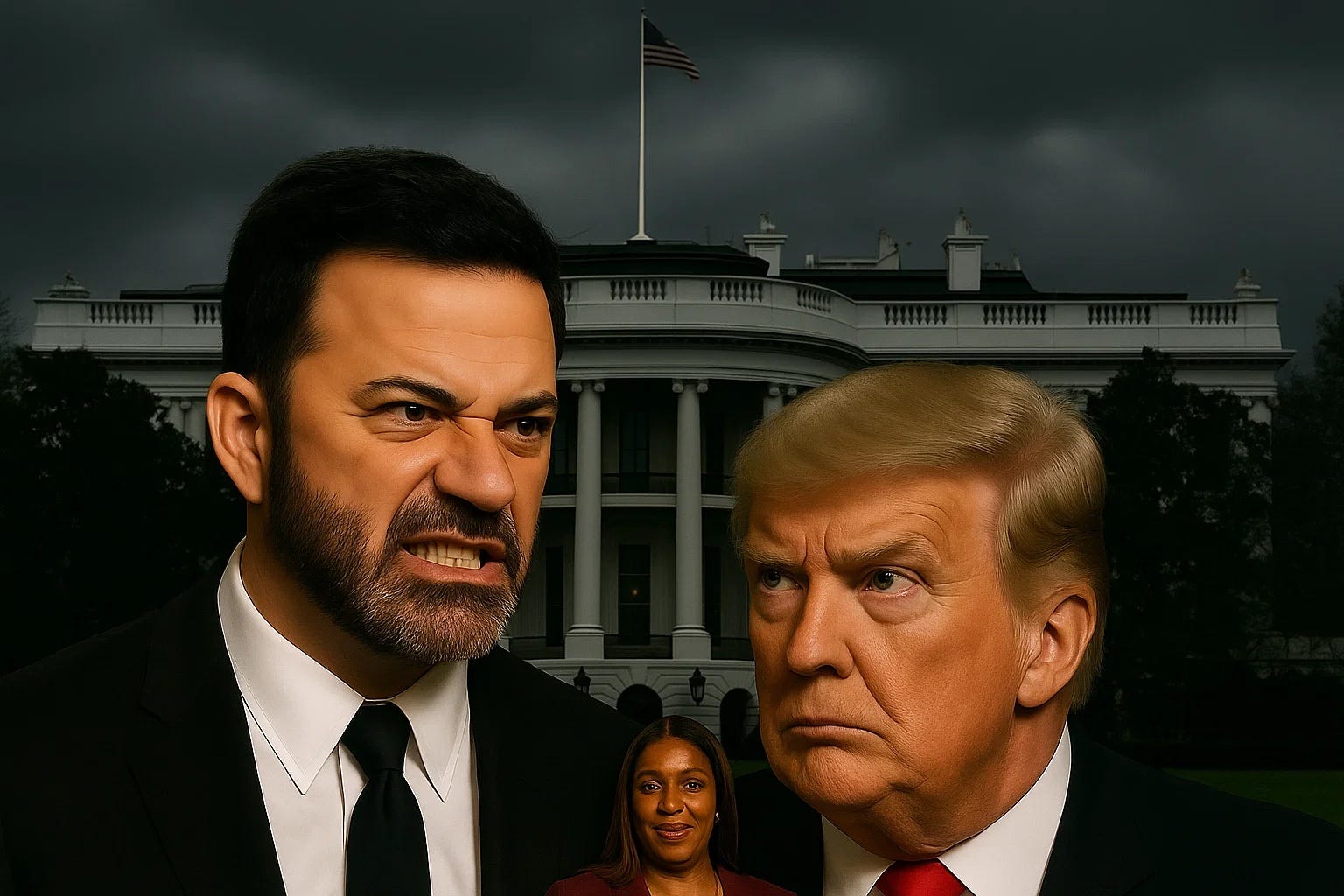
Jimmy Kimmel is furious. ABC yanked him off the air after a monologue where he suggested Charlie Kirk was assassinated by someone from the MAGA movement (and after the chair of the FCC weighed in on the situation during an interview). Kimmel’s future at ABC is now in limbo. On the other side of the country, President Trump has sought to fire Federal Reserve Governor Lisa Cook on contested allegations of mortgage fraud, triggering a historic legal battle over the Fed’s independence. Meanwhile, reports surfaced that Trump pressured a U.S. attorney in Virginia to probe New York Attorney General Letitia James—the same James who grew her fame by suing Trump. Democrats and commentators call the current state of affairs hypocritical. Weren’t Republicans the ones howling about weaponized justice and cancel culture? Yes. This is not irrational. It's game theory in action.
American politics isn’t a morality tale. It’s a repeated game with endless rounds and each side responding to the other's previous move. In the 1980s, political scientist Robert Axelrod ran tournaments to test strategies to win the Prisoner's Dilemma, which describes two players who can either cooperate or defect: cooperation brings the best outcome, but the lure of cheating for a personal win often leaves both worse off. The surprise winner was “Tit for Tat,” a simple algorithm that starts by cooperating, then copies the opponent’s previous move. Its genius was simplicity: reward cooperation, punish betrayal, and forgive quickly.
While political hardball isn't new, recent years have seen a Tit for Tat-like escalation in specific domains. Democrats leaned into legal challenges, impeachments, and social pressure; Republicans responded with their own investigations and norm-breaking to gain a competitive advantage. Each side points to the other's previous moves to justify their current tactics as the arms race accelerates. The result isn’t just partisan hypocrisy, but system-wide Tit for Tat logic in action, copying the other side’s move in each round of gameplay. These rounds build on each other, with past behavior defining expectations and responses, just as in Axelrod’s tournaments.
Cries of hypocrisy miss the deeper system-wide dynamic. Democrats and Republicans have learned that unilateral cooperation can mean getting played for suckers, while retaliation pays off in the short-term gratification world we now live in. Kimmel, Cook, and James aren’t anomalies, but casualties of war in an endless Axelrod tournament that threatens to grind away what little trust remains in America’s institutions.