


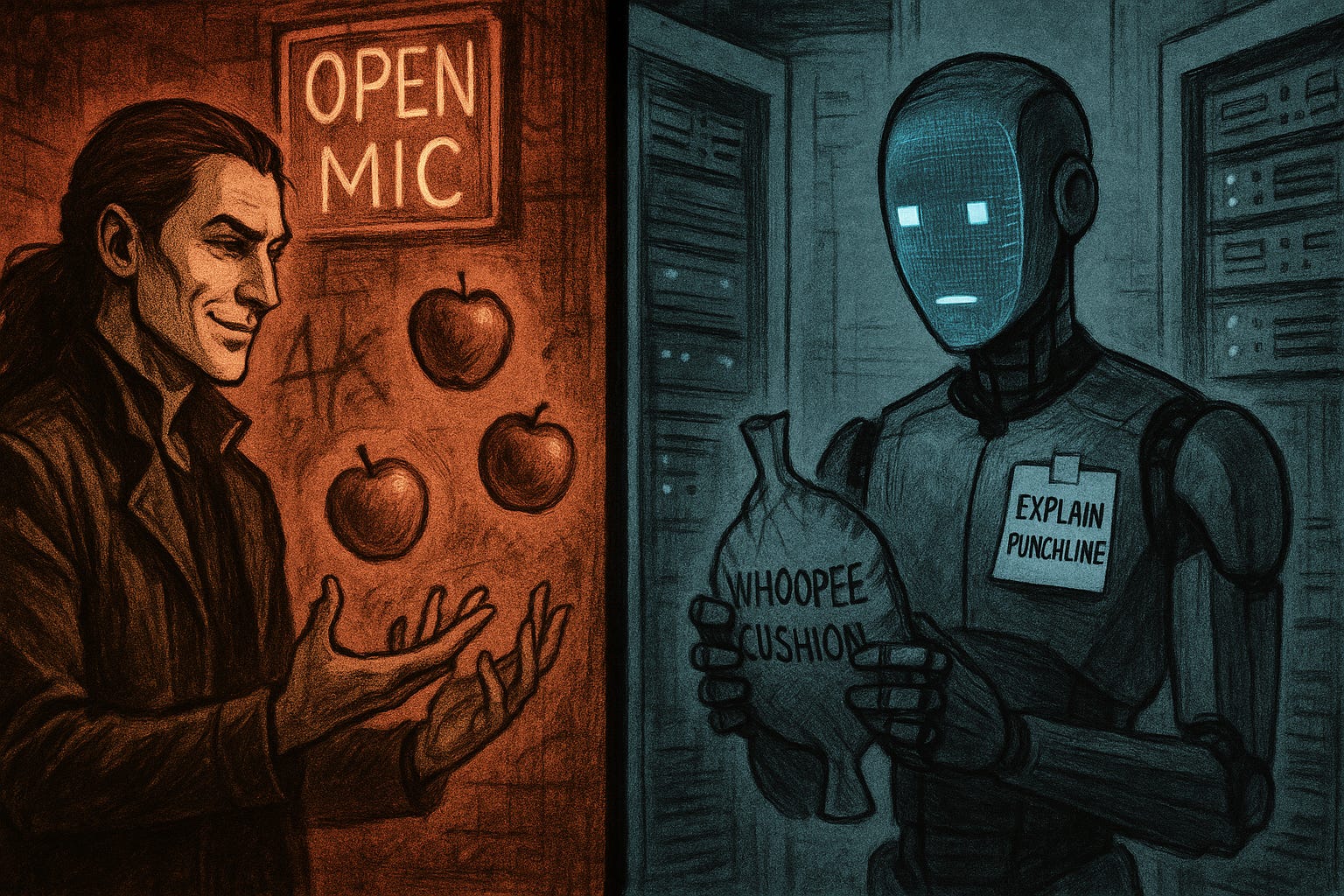
The ancient gods were pranksters. Loki, Hermes, and Krishna mocked mortals to teach them wisdom. But the new digital gods we’re building don’t have the same sense of humor. AI is getting smarter by the day, but it still can’t read the room.
Ask for one specific thing, and it follows you around like an overeager intern, constantly offering more help. “Here’s my analysis of that bump on your forearm. Would you like me to explain what happens at the ER? Or tell you where to buy Advil within a mile of your house?” If I wanted neediness at scale, I wouldn’t have deleted my Twitter account.
Meanwhile, the industry races toward something grander. Meta has merged its AI projects into a new Superintelligence Labs division, pouring billions into the hunt for artificial general intelligence and dangling enormous packages to poach elite talent from competitors. Other leaders like Sam Altman at OpenAI promise systems that will out-reason, out-plan, and out-create the smartest humans alive within a few years. But while my chatbot can list endless variations on a dry martini, it can’t comprehend a dry sense of humor.
Recently, I asked ChatGPT about the Golem, a manmade figure animated by words and willpower in Jewish folklore, and a recurring metaphor for AI, and received a thoughtful answer. But then I referenced the Golem joke in Inglourious Basterds and, sarcastically, asked if Quentin Tarantino himself might be a golem. Instead of laughing or even noting the absurdity, it delivered a four-part analysis of why Tarantino might embody “Jewish mysticism on screen.” A college student would have rolled their eyes at my bad joke. The genius machine leaned into the ask.
These lapses aren’t just quirks. Humor, sarcasm, and reading the emotional temperature of a room are deeply human skills that rely on context, culture, and empathy. AI can pass tests and assemble data, but it consistently flunks social cues.
What happens when we hand that kind of intelligence the keys to everything?
In medicine, a superintelligent diagnostic system might optimize treatments while missing that a patient is too ashamed to describe their real symptoms. In finance, AI could execute panic-driven trades that a human would have talked someone down from. It might approve insurance claims from smooth liars while denying nervous, honest people. It could even escalate military conflicts, WarGames style, because it can’t tell when an adversary is bluffing or begging for a face-saving exit.
We’re investing trillions to build gods that can solve impossible math problems but can’t read a room. Until machines can grasp tone, humor, and intent, the smartest systems will remain blind to the something that truly defines intelligence: knowing when to lean in and when to back off.
Before AI learns to rule the world, it should probably learn to take a joke.